

Developing and supporting people
We support learners from their first caregiving lessons to conversations about work and daily life in Japan.
Learning begins at home, grows through care work in Japan, and returns to the next generation. KIHDO connects the people and schools that make this possible.
Explore the Kitasato Method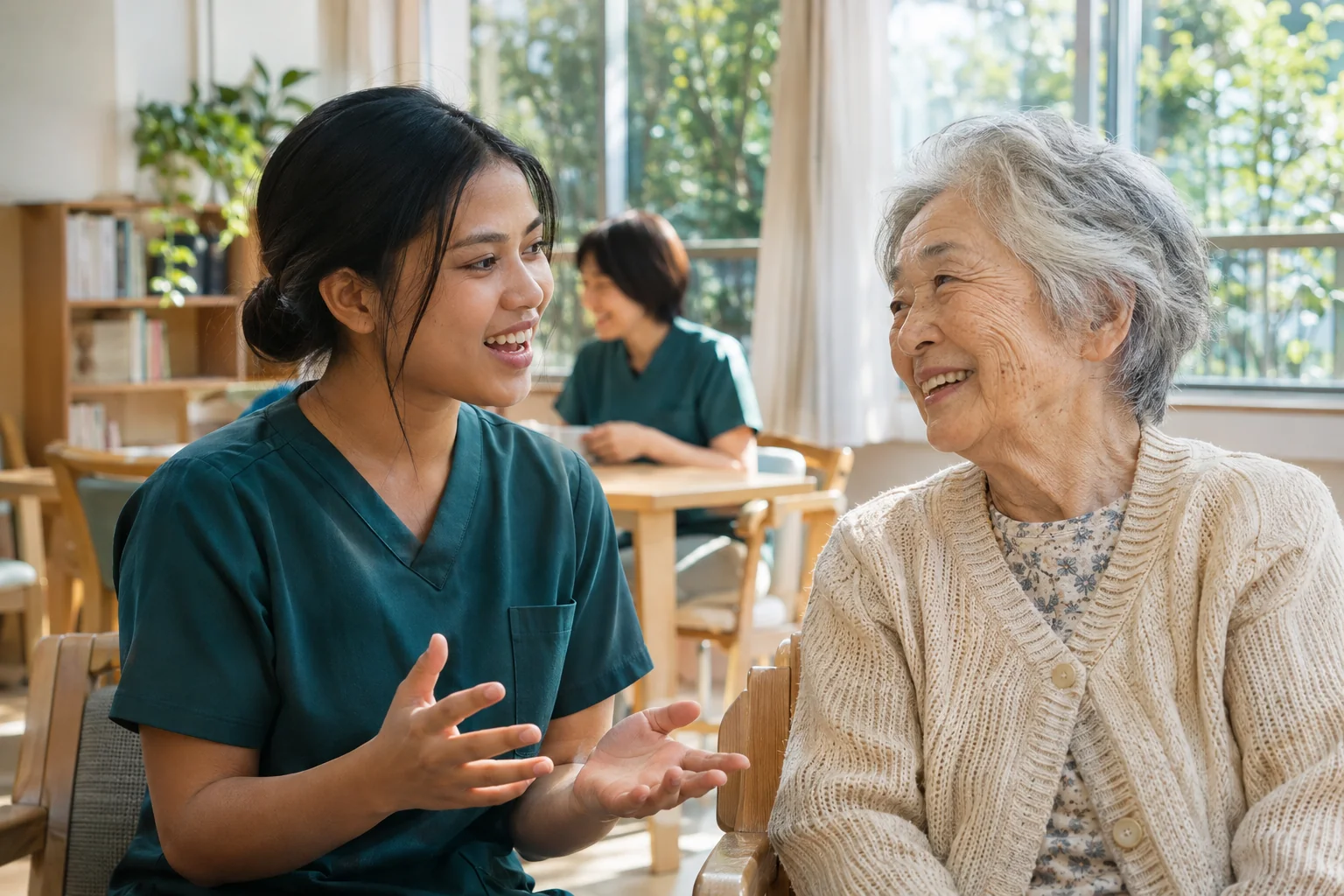
Knowing how to give care and feeling able to ask a question in a new workplace both matter. KIHDO brings learners, teachers and care providers together.
We support learners from their first caregiving lessons to conversations about work and daily life in Japan.

We share learning materials and teaching approaches with overseas schools so students can study Japanese caregiving before they arrive.

We encourage dialogue among employers, educators and public institutions so that lessons reflect the needs of care settings.

We are developing ways for returning caregivers to pass their experience on to the next generation in their communities.
The Kitasato Method helps learners and educators identify strengths and areas where support would help. It looks at five abilities that matter in day-to-day care.
Schools can use the assessment to plan lessons. Care providers can use it to guide interviews and support new colleagues as they settle in.
Understanding a procedure and applying it to a situation. Practical exercises help learners and teachers see what has been mastered.
Listening, explaining and checking understanding, whether speaking with someone receiving care or reporting a change to a colleague.
Listening carefully and recognising another person’s wishes, both when providing care and when working in a team.
Recognising differences in everyday routines and knowing when to ask for guidance at work or in the community.
Explaining why caregiving matters to the learner, setting personal goals and continuing to learn on the job.
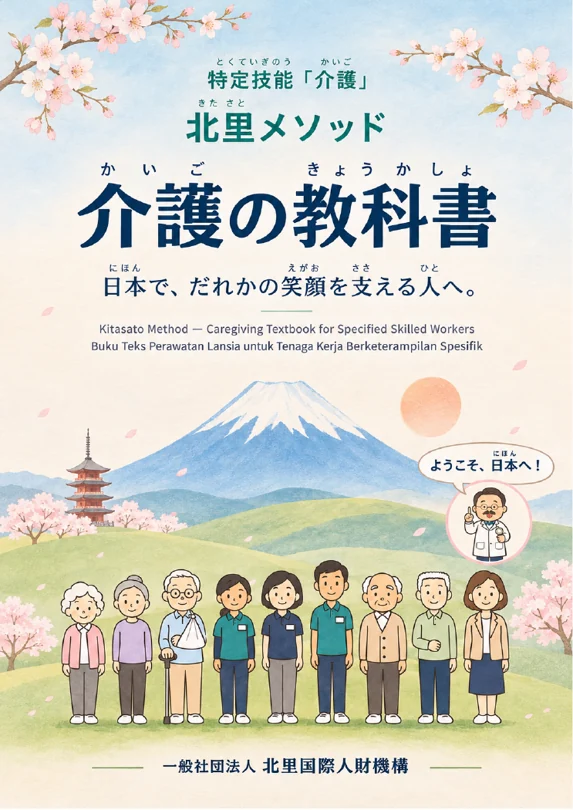
Illustrations and sample conversations bring everyday care situations into the classroom, from offering help at mealtimes to handing over information to colleagues.
Our aim is for students to learn at home, gain practical experience in Japan, and return to teach future caregivers in their own communities.
Students build caregiving knowledge, practical skills and Japanese language skills with local educators before travelling to Japan.
We support people seeking care work through the Specified Skilled Worker pathway. We aim to give both employees and care providers a place to discuss work and daily life.
We are exploring a KIHDO assessment and instructor certification pathway so experienced returnees can become candidates for teaching roles at partner schools.
Contact us to discuss support for care providers, teaching materials, educator training or a partnership with your school.